
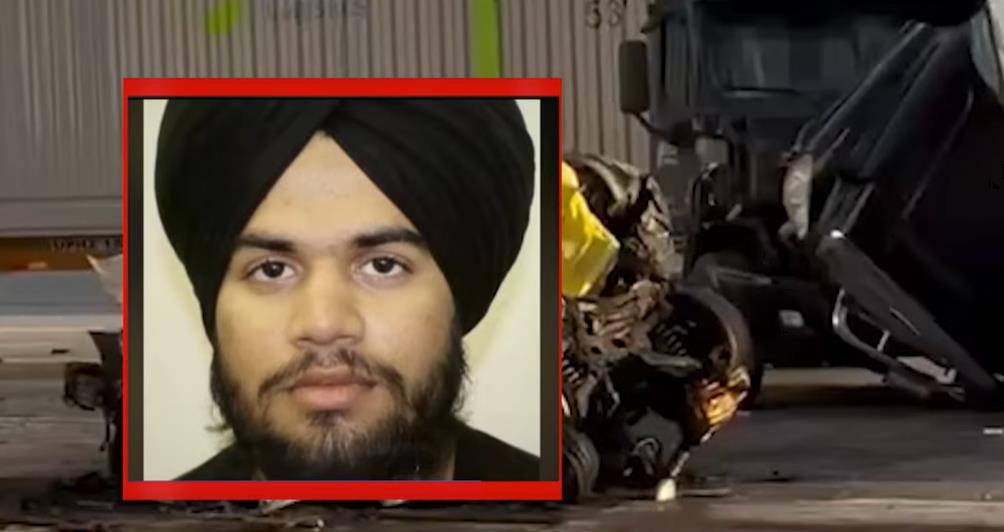
The media’s spotlight on the Sikh community, particularly its visible population of truck drivers in the United States, uses a troubling double standard. It’s a practice that pins a religious label on negative acts while often dropping that same label when the news is positive. This selective focus, often passed off as simple “reporting,” effectively singles out an entire minority group for blame.
The two accidents converted into two high-profile tragedies in 2025-a fatal Florida crash on August 12, and another in California on October 21-show this pattern clearly. Headlines from both Indian and diaspora news outlets immediately went for the specific religious identity. The Times of India ran with themes such as: ‘Sikh truckers in hot seat after twin crashes draw scrutiny,’ with other international channels warning of “backlash” against the community. The main terms used were “Sikh trucker” or “Indian-origin Sikh driver.” The TOI headline tends to convey as if agencies are investigating only Sikh truckers!
This is a form of linguistic othering-using language to constantly define a group as fundamentally different-and its deep roots are clearly visible in cultural coverage originating from within India.
The Cultural Reflex: Singling Out the Minority
The issue mirrors a cultural habit long seen in Indian media. When celebrating the births of the Sikh Gurus (Prakash Purabs), it has been standard practice for many channels, including Door Darshan, to invariably use the precise phrase: “Sikhon ke Guru” (Guru of the Sikhs), explicitly linking the reverence to the Sikh faith. Yet, by contrast, figures revered by the majority, like Lord Ram or Krishna, are simply called “Bhagwan” or Paigambar in case of others”-their faith is assumed as a universal cultural default. Saints like Kabir or Ravidas, whose compositions are integral to Shri Guru Granth Sahib, are often just addressed as Bhagat or Sant without specifying the sects and communities that follow them exclusively.
The media’s choice to be so precise about the Sikh identity, while allowing the majority’s identity to blend into a universal mainstream, does not seem to be accidental.
The Burden of the Negative Prefix
This double standard becomes most obvious in crime reporting. In India, when reporting on crimes, the identity of alleged perpetrators generally remains neutral. The religious label is routinely left out. However, that neutrality often disappears if the alleged perpetrator is Sikh or Nihang. The community’s religious identity suddenly becomes the most crucial detail about the crime.
The Indian media then brings this practice to the international stage. The reporting on the recent crashes has been more focused on their faith than on other aspects. In the California case, Jashanpreet Singh was charged with Driving Under the Influence (DUI). Though The Tribune reported that his family insisted he was an ‘Amrit Dhari Sikh’ who abstained from intoxicants. The inclusion of the religious detail served only to associate the alleged offense with the community’s highest religious standard.
This practice is glaring when set against the broader context of U.S. roads. The National Highway Traffic Safety Administration (NHTSA) reports thousands of fatal truck accidents every year. Countless drivers from every background, including legal residents, U.S. citizens, and illegal immigrants, are involved. It could have been another driver from any background who caused these tragic crashes. Likewise, the U.S. border sees high numbers of illegal immigrants annually. Yet, in this case, the media applied a rare, intense focus-a racial and religious profiling-that almost exclusively targeted the Sikh identity.
News about Deepawali revelers trashing streets trickled in but no one used religious tags in headlines.
The Sikh community, making up just 0.2% of the U.S. population, holds an outsized share of commercial driving jobs, with estimates suggesting 150,000 to 250,000 Sikh drivers. Yet, official U.S. data does not track the driver’s religion in crash reports. The only reason the specific Sikh faith is invoked and amplified is to associate the visible community with the negative act.
The Vanishing Prefix and the Way Forward
This bias is confirmed when we look at positive stories. When Sikh truckers powered supply chains during the 2020 COVID-19 crisis, they were often hailed as “Truckers Keeping North America Moving,” with the religious context being only an aside, used to explain seva (selfless service). In positive news, the “Sikh” tag is often minimized or vanishes, replaced by a generic “hero” or “community member.” This demonstrates a profound asymmetry: The prefix is required for scandal, but optional for triumph.
The consequence is a real-world social cost. The crash coverage, fueled by the focus on the “Sikh” tag, resulted in online harassment, including slurs and threats, reviving old smears against the community. The responsibility here lies squarely with the editorial judgment of
newsrooms, not the incident itself. News organizations must recognize that reporting the religious identity of an individual-especially a minority member-in a criminal/ negative context has the powerful effect of stereotyping an entire group. A headline should inform the reader, not sensationalize tragedy or promote an unconscious bias. The media has a duty to report incidents in a consistent, fair manner, applying neutral descriptors like “driver” or “Indian-origin national” unless faith is unequivocally central to the story. Until that day comes, these selective headlines will continue to indict a community rather than merely inform the public.
The world needs to wake -up.

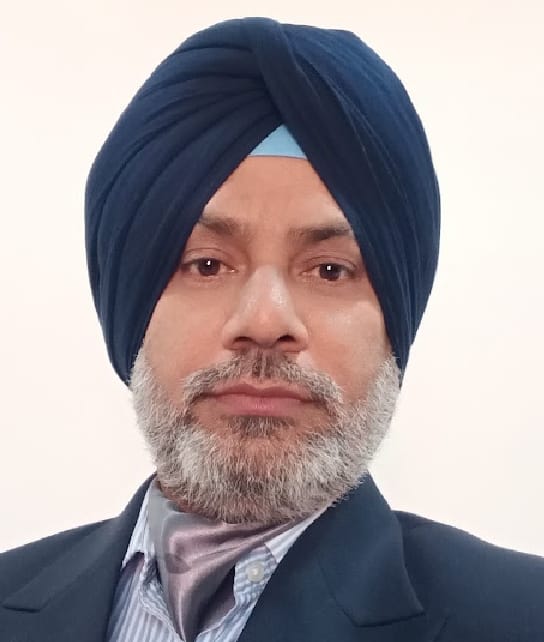
About the writer: Jatinder Pal Singh is an opinion columnist and social commentator whose voice carries the weight of experience and conviction. A former Commandant with a distinguished 25-year career in a Central Paramilitary Force (CPMF), he voluntarily retired in 2024 after serving across India-from conflict zones to disaster fronts. Having joined the service in 1999, Commandant Singh’s career spanned critical operations, leadership roles, and training assignments that shaped his understanding of discipline, human behavior, and crisis management. His insights are grounded not only in field realities but also in academic rigor-he holds a Master’s in Public Administration and an MPhil in Security Studies, alongside numerous in-service courses from reputed institutions. Since launching his column in March 2025, Commandant Singh has developed a distinctive voice-sharp, unapologetic, and occasionally laced with dry humor. His writings-Unapologetic and Unfiltered Contemplations & Ramblings of a Tinkerer”-are raw reflections on society’s moral and political landscape, intended to provoke thought and dialogue rather than comfort. With over 30 opinion pieces published as of September 2025, Jatinder Pal Singh